by Tom Ellis
ALBANY: Schenectady County Historical Society Historian and Director of Education Michael Diana spoke at the October 29, 2025 Save the Pine Bush dinner. His topic was Uncover the Pine Bush’s Hidden History. Mr. Diana grew up in Guilderland and attended Pine Bush Elementary School.
He said the pine bush was mostly untouched until recently and congratulated Don Rittner for his considerable pine barrens research. He asked and answered the question: Why is the Pine Bush unique? Rare ecological features emerged from melting ice that settled in a delta just west of present-day Albany. The landscape literally rose up after the thick Ice Age ice melted. The local pine barrens is also unusual in that they are so far inland.
Vegetation stabilizes the sand dunes. Today’s pine barrens are “a fraction of a fraction” of those from yesteryear. At one time, they stretched from the east part of present-day Albany to where the Schenectady Stockade is now located. Perhaps ten percent is protected. The pine barrens being not easily farmable contributed to their being mostly intact well into the twentieth century.
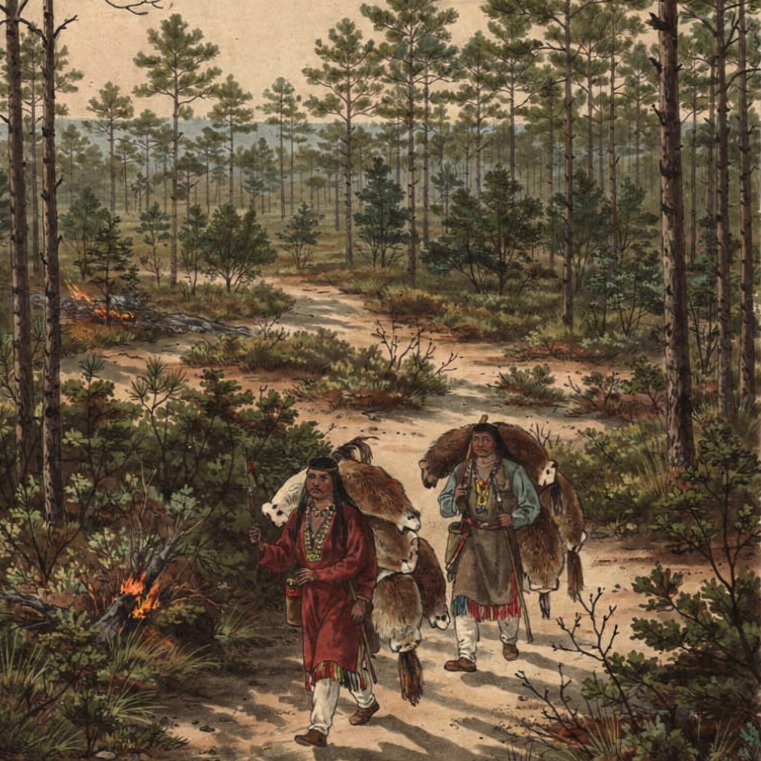
Written records go back to the seventeenth century, he said. The pine barrens had been a border of sorts between Mohawk and Mohican lands. During the 1600s, Mohawks pushed east into Mohican lands. Dutch written records beginning in the 1650s noted Indians conducted burns to limit underbrush and enhance hunting success.
Beaver pelts drove the colonial economy in 1600s. Beverwyck, later renamed Albany. Indians delivered pelts to Beverwyck. As they became increasingly vested in the fur trade, Mohawk traders avoided the Cohoes Falls and walked through fifteen miles of sandy scrubby pine barrens.
Native communities experienced mortality rates of up to fifty percent from European diseases. Dutch traders competed with each other and captured Mohawks to confiscate their furs. The Dutch West India Company sold and gave tracts to Kiliaen van Rensselaer of about one million acres; people who lived on his tract paid him rent. Most of the pine barrens were on Van Rensselaer’s lands. Private ownership of property was allowed in what became Albany.
Schenectady was established in 1661 when the Dutch built another town just beyond the pines. They adapted the Mohawk trail, later named the King’s Highway, to connect them. After the English rulers replaced the Dutch in 1664 and allowed people to live along the King’s Highway, residents began removing sand from the pine barrens for unknown reasons. For the most part, lands between the towns remained an unused-by-people wilderness.
During the early 1700s, Palatine refugees from Germany settled in the region, later blazing a trail to Schoharie County. Their belief that pitch from the pitch pines was not usable in ship construction may have motivated their move to the west.
The pine barrens remained undesirable for settlement during most of the Eighteenth Century. Fifteen miles was a long road to travel in the 1700s. A few seedy taverns were built, Isaac Truax’s tavern being one. Truax was a Revolutionary War Loyalist. George Washington traveled the King’s Highway.
The pine barrens were mostly left intact during the 1800s too. Erie Canal construction 200 hundred years ago had little impact. A steam locomotive-powered Albany-to-Schenectady railroad began operation in 1831. The railroad traversed the pine barrens but did not stimulate development along the route. Four-hundred Oneidas moved to the fringes of Schenectady on the edge of the pine barrens. Although expert basket makers, Mr. Diana said there are no known primary sources about them. Land swindles occurred in the 1800s as Albany city sold pine barrens lots that were often rebought and sold. In 1858, one man tried to sell a large lot to uninformed buyers.
A few settlers learned to farm the pine barrens, one man grew celery, but the Nineteenth Century left the pine barrens mostly untouched.
Blacks escaping from racism, repression and poverty began building a community on Rapp Road in the 1920s leading to a chain migration with dozens coming north and creating a transplanted southern community. Rutted roads and criss-crossing dirt paths were still common in the 1940s.
Rapid change came after World War Two as car owners escaped the cities to rural areas. The 1950s were a decade of suburbanization and quickened development; the NYS Thruway cut directly across the pine barrens stimulating construction of other roads. Large numbers of people came to settle in the pine barrens for the first time. Today there are many paved parking lots. Suppression of fires allowed newer tree species to move in. Mr. Diana concluded his comments with, “It is a geological and historical onclave; I would hate to see it go.”
During the questions and comments, Mr Diana said much of his information came from Don Ritner’s publications and the SPB website, it was probably not economically viable for the Palatines to live in the pine barrens during the 1700s, and other than Six Mile Waterworks, there is not much freshwater in the Pine Bush. Lynne Jackson said the Pine Bush sits atop a primary aquifer. He said the 17th and 18th century pine barrens was a lawless area other than the King’s Highway.